Friday, May 05, 2006

Another Music Lesson...

Thought that I would offer up another music lesson to my future children. Today I will introduce you to the Rolling Stones..the group that never wants to die. Enjoy the article:

By the time the Rolling Stones began calling themselves the World's Greatest Rock & Roll Band in the late '60s, they had already staked out an impressive claim on the title. As the self-consciously dangerous alternative to the bouncy Merseybeat of the Beatles in the British Invasion, the Stones had pioneered the gritty, hard-driving blues-based rock & roll that came to define hard rock. With his preening machismo and latent maliciousness, Mick Jagger became the prototypical rock frontman, tempering his macho showmanship with a detached, campy irony while Keith Richards and Brian Jones wrote the blueprint for sinewy, interlocking rhythm guitars. Backed by the strong yet subtly swinging rhythm section of bassist Bill Wyman and drummer Charlie Watts, the Stones became the breakout band of the British blues scene, eclipsing such contemporaries as the Animals and Them. Over the course of their career, the Stones never really abandoned blues, but as soon as they reached popularity in the U.K., they began experimenting musically, incorporating the British pop of contemporaries like the Beatles, Kinks, and Who into their sound. After a brief dalliance with psychedelia, the Stones re-emerged in the late '60s as a jaded, blues-soaked hard rock quintet. The Stones always flirted with the seedy side of rock & roll, but as the hippie dream began to break apart, they exposed and reveled in the new rock culture. It wasn't without difficulty, of course. Shortly after he was fired from the group, Jones was found dead in a swimming pool, while at a 1969 free concert at Altamont, a concertgoer was brutally killed during the Stones' show. But the Stones never stopped going. For the next 30 years, they continued to record and perform, and while their records weren't always blockbusters, they were never less than the most visible band of their era — certainly, none of their British peers continued to be as popular or productive as the Stones. And no band since has proven to have such a broad fan base or far-reaching popularity, and it is impossible to hear any of the groups that followed them without detecting some sort of influence, whether it was musical or aesthetic.

Throughout their career, Mick Jagger (vocals) and Keith Richards (guitar, vocals) remained at the core of the Rolling Stones. The pair initially met as children at Dartford Maypole County Primary School. They drifted apart over the next ten years, eventually making each other's acquaintance again in 1960, when they met through a mutual friend, Dick Taylor, who was attending Sidcup Art School with Richards. At the time, Jagger was studying at the London School of Economics and playing with Taylor in the blues band Little Boy Blue and the Blue Boys. Shortly afterward, Richards joined the band. Within a year, they had met Brian Jones (guitar, vocals), a Cheltenham native who had dropped out of school to play saxophone and clarinet. By the time he became a fixture on the British blues scene, Jones had already had a wild life. He ran away to Scandinavia when he was 16; by that time, he had already fathered two illegitimate children. He returned to Cheltenham after a few months, where he began playing with the Ramrods. Shortly afterward, he moved to London, where he played in Alexis Korner's group, Blues Inc. Jones quickly decided he wanted to form his own group and advertised for members; among those he recruited was the heavyset blues pianist Ian Stewart.

As he played with his group, Jones also moonlighted under the name Elmo Jones at the Ealing Blues Club. At the pub, he became reacquainted with Blues, Inc., which now featured drummer Charlie Watts, and, on occasion, cameos by Jagger and Richards. Jones became friends with Jagger and Richards, and they soon began playing together with Taylor and Stewart; during this time, Mick was elevated to the status of Blues, Inc.'s lead singer. With the assistance of drummer Tony Chapman, the fledgling band recorded a demo tape. After the tape was rejected by EMI, Taylor left the band to attend the Royal College of Art; he would later form the Pretty Things. Before Taylor's departure, the group named itself the Rolling Stones, borrowing the moniker from a Muddy Waters song.

The Rolling Stones gave their first performance at the Marquee Club in London on July 12, 1962. At the time, the group consisted of Jagger, Richards, Jones, pianist Ian Stewart, drummer Mick Avory, and Dick Taylor, who had briefly returned to the fold. Weeks after the concert, Taylor left again and was replaced by Bill Wyman, formerly of the Cliftons. Avory also left the group — he would later join the Kinks — and the Stones hired Tony Chapman, who proved to be unsatisfactory. After a few months of persuasion, the band recruited Charlie Watts, who had quit Blues, Inc. to work at an advertising agency once the group's schedule became too hectic. By 1963, the band's lineup had been set, and the Stones began an eight-month residency at the Crawdaddy Club, which proved to substantially increase their fan base. It also attracted the attention of Andrew Loog Oldham, who became the Stones' manager, signing them from underneath Crawdaddy's Giorgio Gomelsky. Although Oldham didn't know much about music, he was gifted at promotion, and he latched upon the idea of fashioning the Stones as the bad-boy opposition to the clean-cut Beatles. At his insistence, the large yet meek Stewart was forced out of the group, since his appearance contrasted with the rest of the group. Stewart didn't disappear from the Stones; he became one of their key roadies and played on their albums and tours until his death in 1985.

With Oldham's help, the Rolling Stones signed with Decca Records, and that June, they released their debut single, a cover of Chuck Berry's "Come On." The single became a minor hit, reaching number 21, and the group supported it with appearances on festivals and package tours. At the end of the year, they released a version of Lennon-McCartney's "I Wanna Be Your Man" that soared into the Top 15. Early in 1964, they released a cover of Buddy Holly's "Not Fade Away," which shot to number three. "Not Fade Away" became their first American hit, reaching number 48 that spring. By that time, the Stones were notorious in their homeland. Considerably rougher and sexier than the Beatles, the Stones were the subject of numerous sensationalistic articles in the British press, culminating in a story about the band urinating in public. All of these stories cemented the Stones as a dangerous, rebellious band in the minds of the public, and had the effect of beginning a manufactured rivalry between them and the Beatles, which helped the group rocket to popularity in the U.S. In the spring of 1964, the Stones released their eponymous debut album, which was followed by "It's All Over Now," their first U.K. number one. That summer, they toured America to riotous crowds, recording the Five by Five EP at Chess Records in Chicago in the midst of the tour. By the time it was over, they had another number one U.K. single with Howlin' Wolf's "Little Red Rooster." Although the Stones had achieved massive popularity, Oldham decided to push Jagger and Richards into composing their own songs, since they — and his publishing company — would receive more money that away. In June of 1964, the group released their first original single, "Tell Me (You're Coming Back)," which became their first American Top 40 hit. Shortly afterward, a version of Irma Thomas' "Time Is on My Side" became their first U.S. Top Ten. It was followed by "The Last Time" in early 1965, a number one U.K. and Top Ten U.S. hit that began a virtually uninterrupted string of Jagger-Richards hit singles. Still, it wasn't until the group released "(I Can't Get No) Satisfaction" in the summer of 1965 that they were elevated to superstars. Driven by a fuzz-guitar riff designed to replicate the sound of a horn section, "Satisfaction" signaled that Jagger and Richards had come into their own as songwriters, breaking away from their blues roots and developing a signature style of big, bluesy riffs and wry, sardonic lyrics. It stayed at number one for four weeks and began a string of Top Ten singles that ran for the next two years, including such classics as "Get off My Cloud," "19th Nervous Breakdown," "As Tears Go By," and "Have You Seen Your Mother, Baby, Standing in the Shadow?"

By 1966, the Stones had decided to respond to the Beatles' increasingly complex albums with their first album of all-original material, Aftermath. Due to Brian Jones' increasingly exotic musical tastes, the record boasted a wide range of influences, from the sitar-drenched "Paint It, Black" to the Eastern drones of "I'm Going Home." These eclectic influences continued to blossom on Between the Buttons (1967), the most pop-oriented album the group ever made. Ironically, the album's release was bookended by two of the most notorious incidents in the band's history. Before the record was released, the Stones performed the suggestive "Let's Spend the Night Together," the B-side to the medieval ballad "Ruby Tuesday," on The Ed Sullivan Show, which forced Jagger to alter the song's title to an incomprehensible mumble, or else face being banned. In February of 1967, Jagger and Richards were arrested for drug possession, and within three months, Jones was arrested on the same charge. All three were given suspended jail sentences, and the group backed away from the spotlight as the summer of love kicked into gear in 1967. Jagger, along with his then-girlfriend Marianne Faithfull, went with the Beatles to meet the Maharishi Mahesh Yogi; they were also prominent in the international broadcast of the Beatles' "All You Need Is Love." Appropriately, the Stones' next single, "Dandelion"/"We Love You," was a psychedelic pop effort, and it was followed by their response to Sgt. Pepper, Their Satanic Majesties Request, which was greeted with lukewarm reviews.The Stones' infatuation with psychedelia was brief. By early 1968, they had fired Andrew Loog Oldham and hired Allen Klein as their manager. The move coincided with their return to driving rock & roll, which happened to coincide with Richards' discovery of open tunings, a move that gave the Stones their distinctively fat, powerful sound. The revitalized Stones were showcased on the malevolent single "Jumpin' Jack Flash," which climbed to number three in May 1968. Their next album, Beggar's Banquet, was finally released in the fall, after being delayed for five months due its controversial cover art of a dirty, graffiti-laden restroom. An edgy record filled with detours into straight blues and campy country, Beggar's Banquet was hailed as a masterpiece among the fledgling rock press. Although it was seen as a return to form, few realized that while it opened a new chapter of the Stones' history, it also was the closing of their time with Brian Jones. Throughout the recording of Beggar's Banquet, Jones was on the sidelines due to his deepening drug addiction and his resentment of the dominance of Jagger and Richards. Jones left the band on June 9, 1969, claiming to be suffering from artistic differences between himself and the rest of the band. On July 3, 1969 — less than a month after his departure — Jones was found dead in his swimming pool. The coroner ruled that it was "death by misadventure," yet his passing was the subject of countless rumors over the next two years. By the time of his death, the Stones had already replaced Brian Jones with Mick Taylor, a former guitarist for John Mayall's Bluesbreakers. He wasn't featured on "Honky Tonk Women," a number one single released days after Jones' funeral, and he contributed only a handful of leads on their next album, Let It Bleed. Released in the fall of 1969, Let It Bleed was comprised of sessions with Jones and Taylor, yet it continued the direction of Beggar's Banquet, signaling that a new era in the Stones' career had begun, one marked by ragged music and an increasingly wasted sensibility. Following Jagger's filming of Ned Kelly in Australia during the first part of 1969, the group launched its first American tour in three years. Throughout the tour — the first where they were billed as the World's Greatest Rock & Roll Band — the group broke attendance records, but it was given a sour note when the group staged a free concert at Altamont Speedway. On the advice of the Grateful Dead, the Stones hired Hell's Angels as security, but that plan backfired tragically. The entire show was unorganized and in shambles, yet it turned tragic when the Angels killed a young black man, Meredith Hunter, during the Stones' performance. In the wake of the public outcry, the Stones again retreated from the spotlight and dropped "Sympathy for the Devil," which some critics ignorantly claimed incited the violence, from their set. As the group entered hiatus, they released the live Get Yer Ya-Ya's Out! in the fall of 1970. It was their last album for Decca/London, and they formed Rolling Stones Records, which became a subsidiary of Atlantic Records. During 1970, Jagger starred in Nicolas Roeg's cult film Performance and married Nicaraguan model Bianca Perez Morena de Macias, and the couple quickly entered high society. As Jagger was jet-setting, Richards was slumming, hanging out with country-rock pioneer Gram Parsons. Keith wound up having more musical influence on 1971's Sticky Fingers, the first album the Stones released though their new label. Following its release, the band retreated to France on tax exile, where they shared a house and recorded a double album, Exile on Main St. Upon its May 1972 release, Exile on Main St. was widely panned, but over time it came to be considered one of the group's defining moments. Following Exile, the Stones began to splinter in two, as Jagger concentrated on being a celebrity and Richards sank into drug addiction. The band remained popular throughout the '70s, but their critical support waned. Goats Head Soup, released in 1973, reached number one, as did 1974's It's Only Rock 'n' Roll, but neither record was particularly well received. Taylor left the band after It's Only Rock 'n' Roll, and the group recorded their next album as they auditioned new lead guitarists, including Jeff Beck. They finally settled on Ron Wood, former lead guitarist for the Faces and Rod Stewart, in 1976, the same year they released Black n' Blue, which only featured Wood on a handful of cuts.

During the mid- and late '70s, all the Stones pursued side projects, with both Wyman and Wood releasing solo albums with regularity. Richards was arrested in Canada in 1977 with his common-law wife Anita Pallenberg for heroin possession. After his arrest, he cleaned up and was given a suspended sentence the following year. The band reconvened in 1978 to record Some Girls, an energetic response to punk, new wave, and disco. The record and its first single, the thumping disco-rocker "Miss You," both reached number one, and the album restored the group's image. However, the group squandered that goodwill with the follow-up, Emotional Rescue, a number one record that nevertheless received lukewarm reviews upon its 1980 release. Tattoo You, released the following year, fared better both critically and commercially, as the singles "Start Me Up" and "Waiting on a Friend" helped the album spend nine weeks at number one. The Stones supported Tattoo You with an extensive stadium tour captured in Hal Ashby's movie Let's Spend the Night Together and the 1982 live album Still Life. Tattoo You proved to be the last time the Stones completely dominated the charts and the stadiums. Although the group continued to sell out concerts in the '80s and '90s, their records didn't sell as well as previous efforts, partially because the albums suffered due to Jagger and Richards' notorious mid-'80s feud. Starting with 1983's Undercover, the duo conflicted about which way the band should go, with Jagger wanting the Stones to follow contemporary trends and Richards wanting them to stay true to their rock roots. As a result, Undercover was a mean-spirited, unfocused record that received relatively weak sales and mixed reviews. Released in 1986, Dirty Work suffered a worse fate, since Jagger was preoccupied with his fledgling solo career. Once Jagger decided that the Stones would not support Dirty Work with a tour, Richards decided to make his own solo record with 1988's Talk Is Cheap. Appearing a year after Jagger's failed second solo album, Talk Is Cheap received good reviews and went gold, prompting Jagger and Richards to reunite late in 1988. The following year, the Stones released Steel Wheels, which was received with good reviews, but the record was overshadowed by its supporting tour, which grossed over 140 million dollars and broke many box office records. In 1991, the live album Flashpoint, which was culled from the Steel Wheels shows, was released. Following the release of Flashpoint, Bill Wyman left the band; he published a memoir, Stone Alone, within a few years of leaving. The Stones didn't immediately replace Wyman, since they were all working on solo projects; this time, there was none of the animosity surrounding their mid-'80s projects. The group reconvened in 1994 with bassist Darryl Jones, who had previously played with Miles Davis and Sting, to record and release the Don Was-produced Voodoo Lounge. The album received the band's strongest reviews in years, and its accompanying tour was even more successful than the Steel Wheels tour. On top of being more successful than its predecessor, Voodoo Lounge also won the Stones their first Grammy for Best Rock Album. Upon the completion of the Voodoo Lounge tour, the Stones released the live, "unplugged" album Stripped in the fall of 1995. Similarly, after wrapping up their tour in support of 1997's Bridges to Babylon, the group issued yet another live set, No Security, the following year. A high-profile greatest-hits tour in 2002 was launched despite the lack of a studio album to support, and its album document Live Licks appeared in 2004. A year later, the group issued A Bigger Bang, their third effort with producer Don Was.

Currently listening to:
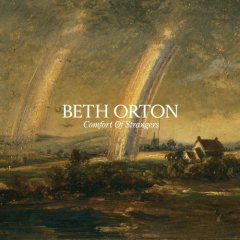
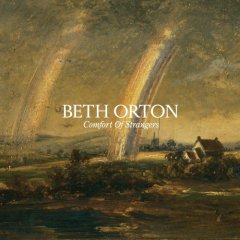
Beth Orton
Comfort of Strangers
Released: 2-7-06

Thursday, May 04, 2006

Time is Ticking Away...

My wife and I went to the OB on Tuesday of this week in order have the regular weekly check-up for the upcoming baby. The baby appears to be healthy, but it appears that it also enjoys eating. According to the OB, the baby is weighing in at 6.8 lbs., which is a little heavier than he wanted. Because of this news, it appears that my wife may be induced in about 2 weeks (possibly 3 depending upon the baby's development during next week's visit). With the sudden news that the baby may be coming in 2 weeks, my wife suddenly has become stressed with trying to get all the 'little things' done (such as getting the baby's room put together and buying little things). Some of my wife's friends from work are throwing her a baby shower this weekend and alot of both sides of the family are coming up. I'm looking forward to seeing everyone and I'm looking forward to people bestowing gifts on my wife so that my pocketbook can rest for a little while. My father in law is definitely going to relieve my wife's stress by putting together the baby's crib (since God did not provide me that gift).

Next week I have to go to Huntsville in order to do some testing at a client I've had for the past 3 years now. I'm a little apprehensive about traveling with the baby so close, but I'd rather do the work now than directly after the baby arrives. I just hope that my company is able to keep me in town more often once the baby arrives. I've traveled heavily for the past 3 years now. I also have the annual consensus meeting next week where my raise will be determined. I hope that my superiors provide me some positive feedback and I get a decent raise. The combination of the travel situation and the consensus meeting outcome will likely determine how much longer I stay with this company. I'm keeping my fingers crossed.

Currently listening to:
Destroyer-Destroyer's Rubies
Released 2-21-06

Thursday, April 13, 2006

Wow..this must be a Record

Pretty amazing that I've actually found time to blog consistently for several days. I guess that this can be attributed to work finally slowing down after about 11 months straight. I can't complain with the slowdown considering the upcoming baby and my need to decompress. Luckily I've been able to accomplish things around the house (cleaning and financial wise). I've also decided to make the effort to blog each day. Hopefully I didn't bore people yesterday with my blog detailing my first (in an ongoing) series of music education for the future children (especially mine). Of course the Beatles will be the longest in this series because of their signficance...children of the current generation who are not educated on the Beatles or who think that Kellie Clarkson or Fall Out Boy are better should be taken out into the backyard and beaten with vinyl copy of a Yanni or a Kenny G album (of course, after Yanni's recent arrest for beating his wife, he may do the beating for me). I'll hold off on offering another music lesson today in order to offer a list of albums that have impressed me over the past few months. The list is in no certain order or level of signficance:

1. Belle and Sebastian-The Life Pursuit
2. Mogwai-Mr. Beast
3. Arctic Monkeys-Whatever People Say I Am, That's What I'm Not
4. Rhett Miller-The Believer
5. Destroyer-Destroyer's Rubies
6. Morrissey-Ringleader of the Tormenters
7. Placebo-Meds
8. Josh Rouse-Subtitulo
9. I Love You But I've Chosen Darkness-Fear is On Our Side
10. Graham Coxon-Love Travels at Illegal Speeds

If you have the opportunity to check out any of these albums, I believe you'll be impressed. If you're regularly watching American Idol (and take it seriously), then maybe they'll be a level of purgatory in music hell awaiting you in the near future.

Wednesday, April 12, 2006

Teach your children well...

With the baby planning to arrive in a little over a month, I've decided to discuss an issue that is very close to my heart..music education (aka development of proper music taste). In this world where shit like American Idol and manufactured top 40 garbage seem to reign, I believe that it is important to document a learning plan to develop a child with good music taste. I have chosen to do this because I don't trust that the world will gain any music taste in the next decade or so, and the fact that my wife's musical taste leaves much to be desired (e.g--Celine Dion...as you can understand, I didn't marry her for her musical expertise). Though I'm sure my children will listen to my music and think I'm an old-fuddy duddy, I now look back (at the age of 28) and realize that my father's music helped guide me in the right direction and developed a strong foundation. My father brought me up listening to a large amount of the Beatles, the Rolling Stones, the Eagles, Billy Joel, Jimmy Buffett, James Taylor, Led Zeppelin, and Cat Stevens. I thank my parents ever so much that they forbid me to listen to hair metal bands of the late 80's. That was a special gift in itself.

Well, the first group that must be taught to America's youth is as follows: This description is from All Music Guide (http://www.allmusic.com/cg/amg.dll?p=amg&sql=11:m9n8b594tsqj~T1)

The Beatles: So much has been said and written about the Beatles — and their story is so mythic in its sweep — that it's difficult to summarize their career without restating clichés that have already been digested by tens of millions of rock fans. To start with the obvious, they were the greatest and most influential act of the rock era, and introduced more innovations into popular music than any other rock band of the 20th century. Moreover, they were among the few artists of any discipline that were simultaneously the best at what they did and the most popular at what they did. Relentlessly imaginative and experimental, the Beatles grabbed a hold of the international mass consciousness in 1964 and never let go for the next six years, always staying ahead of the pack in terms of creativity but never losing their ability to communicate their increasingly sophisticated ideas to a mass audience. Their supremacy as rock icons remains unchallenged to this day, decades after their breakup in 1970.
Even when couching praise in specific terms, it's hard to convey the scope of the Beatles' achievements in a mere paragraph or two. They synthesized all that was good about early rock & roll, and changed it into something original and even more exciting. They established the prototype for the self-contained rock group that wrote and performed its own material. As composers, their craft and melodic inventiveness were second to none, and key to the evolution of rock from its blues/R&B-based forms into a style that was far more eclectic, but equally visceral. As singers, both John Lennon and Paul McCartney were among the best and most expressive vocalists in rock; the group's harmonies were intricate and exhilarating. As performers, they were (at least until touring had ground them down) exciting and photogenic; when they retreated into the studio, they were instrumental in pioneering advanced techniques and multi-layered arrangements. They were also the first British rock group to achieve worldwide prominence, launching a British Invasion that made rock truly an international phenomenon.
More than any other top group, the Beatles' success was very much a case of the whole being greater than the sum of its parts. Their phenomenal cohesion was due in large degree to most of the group having known each other and played together in Liverpool for about five years before they began to have hit records. Guitarist and teenage rebel John Lennon got hooked on rock & roll in the mid-'50s, and formed a band, the Quarrymen, at his high school. Around mid-1957, the Quarrymen were joined by another guitarist, Paul McCartney, nearly two years Lennon's junior. A bit later they were joined by another guitarist, George Harrison, a friend of McCartney. The Quarrymen would change lineups constantly in the late '50s, eventually reducing to the core trio of guitarists, who'd proven themselves to be the best musicians and most personally compatible individuals within the band.
The Quarrymen changed their name to the Silver Beatles in 1960, quickly dropping the "Silver" to become just the Beatles. Lennon's art college friend Stuart Sutcliffe joined on bass, but finding a permanent drummer was a vexing problem until Pete Best joined in the summer of 1960. He successfully auditioned for the combo just before they left for a several-month stint in Hamburg, Germany.
Hamburg was the Beatles' baptism by fire. Playing grueling sessions for hours on end in one of the most notorious red-light districts in the world, the group was forced to expand its repertoire, tighten up its chops, and invest its show with enough manic energy to keep the rowdy crowds satisfied. When they returned to Liverpool at the end of 1960, the band — formerly also-rans on the exploding Liverpudlian "beat" scene — were suddenly the most exciting act on the local circuit. They consolidated their following in 1961 with constant gigging in the Merseyside area, most often at the legendary Cavern Club, the incubator of the Merseybeat sound.
They also returned for engagements in Hamburg during 1961, although Sutcliffe dropped out of the band that year to concentrate on his art school studies there. McCartney took over on bass, Harrison settled in as lead guitarist, and Lennon had rhythm guitar; everyone sang. In mid-1961, the Beatles (minus Sutcliffe) made their first recordings in Germany, as a backup group to a British rock guitarist/singer based in Hamburg, Tony Sheridan. The Beatles hadn't fully developed at this point, and these recordings — many of which (including a couple of Sheridan-less tracks) were issued only after the band's rise to fame — found their talents in a most embryonic state. The Hamburg stint was also notable for gaining the Beatles sophisticated, artistic fans such as Sutcliffe's girlfriend, Astrid Kirchherr, who influenced all of them (except Best) to restyle their quiffs in the moptops that gave the musicians their most distinctive visual trademark. (Sutcliffe, tragically, would die of a brain hemorrhage in April 1962).
Near the end of 1961, the Beatles' exploding local popularity caught the attention of local record store manager Brian Epstein, who was soon managing the band as well. He used his contacts to swiftly acquire a January 1, 1962, audition at Decca Records that has been heavily bootlegged (some tracks were officially released in 1995). After weeks of deliberation, Decca turned them down as did several other British labels. Epstein's perseverance was finally rewarded with an audition for producer George Martin at Parlophone, an EMI subsidiary; Martin signed the Beatles in mid-1962. By this time, Epstein was assiduously grooming his charges for national success by influencing them to smarten up their appearance, dispensing with their leather jackets and trousers in favor of tailored suits and ties.
One more major change was in the offing before the Beatles made their Parlophone debut. In August 1962, drummer Pete Best was kicked out of the group, a controversial decision that has been the cause of much speculation since. There is still no solid consensus as to whether it was because of his solitary, moody nature; the other Beatles' jealousy of his popularity with the fans; his musical shortcomings (George Martin had already told Epstein that Best wasn't good enough to drum on recordings); or his refusal to wear his hair in bangs. What seems most likely was that the Beatles simply found his personality incompatible, preferring to enlist Ringo Starr (born Richard Starkey), a drummer with another popular Merseyside outfit, Rory Storm & the Hurricanes. Starr had been in the Beatles for a few weeks when they recorded their first single, "Love Me Do"/"P.S. I Love You," in September 1962. Both sides of the 45 were Lennon-McCartney originals, and the songwriting team would be credited with most of the group's material throughout the Beatles' career.
The single, a promising but fairly rudimentary effort, hovered around the lower reaches of the British Top 20. The Beatles phenomenon didn't truly kick in until "Please Please Me," which topped the British charts in early 1963. This was the prototype British Invasion single: an infectious melody, charging guitars, and positively exuberant harmonies. The same traits were evident on their third 45, "From Me to You" (a British number one), and their debut LP, Please Please Me. Although it was mostly recorded in a single day, Please Please Me topped the British charts for an astonishing 30 weeks, establishing the group as the most popular rock & roll act ever seen in the U.K.
What the Beatles had done was take the best elements of the rock and pop they loved and make them their own. Since the Quarrymen days, they had been steeped in the classic early rock of Elvis, Buddy Holly, Chuck Berry, Little Richard, Carl Perkins, and the Everly Brothers; they'd also kept an ear open to the early '60s sounds of Motown, Phil Spector, and the girl groups. What they added was an unmatched songwriting savvy (inspired by Brill Building teams such as Gerry Goffin and Carole King), a brash guitar-oriented attack, wildly enthusiastic vocals, and the embodiment of the youthful flair of their generation, ready to dispense with postwar austerity and claim a culture of their own. They were also unsurpassed in their eclecticism, willing to borrow from blues, popular standards, gospel, folk, or whatever seemed suitable for their musical vision. Producer George Martin was the perfect foil for the group, refining their ideas without tinkering with their cores; during the last half of their career, he was indispensable for his ability to translate their concepts into arrangements that required complex orchestration, innovative applications of recording technology, and an ever-widening array of instruments.
Just as crucially, the Beatles were never ones to stand still and milk formulas. All of their subsequent albums and singles would show remarkable artistic progression (though never at the expense of a damn catchy tune). Even on their second LP, With the Beatles (1963), it was evident that their talents as composers and instrumentalists were expanding furiously, as they devised ever more inventive melodies and harmonies, and boosted the fullness of their arrangements. "She Loves You" and "I Want to Hold Your Hand" established the group not just as a popular music act, but as a phenomenon never before seen in the British entertainment business, as each single sold over a million copies in the U.K. After some celebrated national TV appearances, Beatlemania broke out across the British Isles in late 1963, and the group generating screams and hysteria at all of their public appearances, musical or otherwise.
Capitol, which had first refusal of the Beatles' recordings in the United States, had declined to issue the group's first few singles, which ended up appearing on relatively small American independents. Capitol took up its option on "I Want to Hold Your Hand," which stormed to the top of the U.S. charts within weeks of its release on December 26, 1963. The Beatles' television appearances on The Ed Sullivan Show in February of 1964 launched Beatlemania (and the entire British Invasion) on an even bigger scale than it had reached in Britain. In the first week of April 1964, the Beatles had the Top Five best-selling singles in the U.S.; they also had the first two slots on the album charts, as well as other entries throughout the Billboard Top 100. No one had ever dominated the market for popular music so heavily; it's doubtful that anyone ever will again. The Beatles themselves would continue to reach number one with most of their singles and albums until their 1970 breakup.
Hard as it may be to believe today, the Beatles were often dismissed by cultural commentators of the time as nothing more than a fad that would vanish within months as the novelty wore off. The group ensured this wouldn't happen by making A Hard Day's Night in early 1964, a cinéma vérité-style motion picture comedy/musical that cemented their image as "the Fab Four": happy-go-lucky, individualistic, cheeky, funny lads with nonstop energy. The soundtrack was also a triumph, consisting entirely of Lennon-McCartney tunes, including such standards as the title tune, "And I Love Her," "If I Fell," "Can't Buy Me Love," and "Things We Said Today." George Harrison's resonant 12-string electric guitar leads were hugely influential; the movie helped persuade the Byrds, then folksingers, to plunge all out into rock & roll, and the Beatles (along with Bob Dylan) would be hugely influential on the folk-rock explosion of 1965. The Beatles' success, too, had begun to open the U.S. market for fellow Brits like the Rolling Stones, the Animals, and the Kinks, and inspired young American groups like the Beau Brummels, Lovin' Spoonful, and others to mount a challenge of their own with self-penned material that owed a great debt to Lennon-McCartney.
Between riotous international tours in 1964 and 1965, the Beatles continued to squeeze out more chart-topping albums and singles. (Until 1967, the group's British albums were often truncated for release in the States; when their catalog was transferred to CD, the albums were released worldwide in their British configurations.) In retrospect, critics have judged Beatles for Sale (late 1964) and Help! (mid-1965) as the band's least impressive efforts. To some degree, that's true. Touring and an insatiable market placed heavy demands upon their songwriting, and some of the originals and covers on these records, while brilliant by many group's standards, were filler in the context of the Beatles' best work.
But when at the top of their game, the group was continuing to push forward. "I Feel Fine" had feedback and brilliant guitar leads; "Ticket to Ride" showed the band beginning to incorporate the ringing, metallic, circular guitar lines that would be appropriated by bands like the Byrds; "Help!" was their first burst of confessional lyricism; "Yesterday" employed a string quartet. John Lennon in particular was beginning to exhibit a Dylanesque influence in his songwriting on such folky, downbeat numbers as "I'm a Loser" and "You've Got to Hide Your Love Away." And tracks like "I Don't Want to Spoil the Party" and "I've Just Seen a Face" had a strong country flavor.
Although the Beatles' second film, Help!, was a much sillier and less sophisticated affair than their first feature, it too was a huge commercial success. By this time, though, the Beatles had nothing to prove in commercial terms; the remaining frontiers were artistic challenges that could only be met in the studio. They rose to the occasion at the end of 1965 with Rubber Soul, one of the classic folk-rock records. Lyrically, Lennon, McCartney, and even Harrison (who was now writing some tunes on his own) were evolving beyond boy-girl scenarios into complex, personal feelings. They were also pushing the limits of studio rock by devising new guitar and bass textures, experimenting with distortion and multi-tracking, and using unconventional (for rock) instruments like the sitar.
As much of a progression as Rubber Soul was relative to their previous records, it was but a taster for the boundary-shattering outings of the next few years. The "Paperback Writer"/"Rain" single found the group abandoning romantic themes entirely, boosting the bass to previously unknown levels, and fooling around with psychedelic imagery and backward tapes on the B-side. Drugs (psychedelic and otherwise) were fueling their already fertile imaginations, but they felt creatively hindered by their touring obligations. Revolver, released in the summer of 1966, proved what the group could be capable of when allotted months of time in the studio. Hazy hard guitars and thicker vocal arrangements formed the bed of these increasingly imagistic, ambitious lyrics; the group's eclecticism now encompassed everything from singalong novelties ("Yellow Submarine") and string quartet-backed character sketches ("Eleanor Rigby") to Indian-influenced swirls of echo and backward tapes ("Tomorrow Never Knows"). Some would complain that the Beatles had abandoned the earthy rock of their roots for clever mannerism. But Revolver, like virtually all of the group's singles and albums from "She Loves You" on, would be a worldwide chart-topper.
For the past couple of years, live performance had become a rote exercise for the group, tired of competing with thousands of screaming fans that drowned out most of their voices and instruments. A 1966 summer worldwide tour was particularly grueling: the group's entourage was physically attacked in the Philippines after a perceived snub of the country's queen, and a casual remark by John Lennon about the Beatles being bigger than Jesus Christ was picked up in the States, resulting in the burning of Beatle records in the Bible belt and demands for a repentant apology. Their final concert of that American tour (in San Francisco on August 29, 1966) would be their last in front of a paying audience, as the group decided to stop playing live in order to concentrate on their studio recordings.
This was a radical (indeed, unprecedented) step in 1966, and the media was rife with speculation that the act was breaking up, especially after all four spent late 1966 engaged in separate personal and artistic pursuits. The appearance of the "Penny Lane"/"Strawberry Fields Forever" single in February 1967 squelched these concerns. Frequently cited as the strongest double A-side ever, the Beatles were now pushing forward into unabashedly psychedelic territory in their use of orchestral arrangements and Mellotron, without abandoning their grasp of memorable melody and immediately accessible lyrical messages.
Sgt. Pepper, released in June 1967 as the Summer of Love dawned, was the definitive psychedelic soundtrack. Or, at least, so it was perceived at the time: subsequent critics have painted the album as an uneven affair, given a conceptual unity via its brilliant multi-tracked overdubs, singalong melodies, and fairy tale-ish lyrics. Others remain convinced, as millions did at the time, that it represented pop's greatest triumph, or indeed an evolution of pop into art with a capital A. In addition to mining all manner of roots influences, the musicians were also picking up vibes from Indian music, avant-garde electronics, classical, music hall, and more. When the Beatles premiered their hippie anthem "All You Need Is Love" as part of a worldwide TV broadcast, they had been truly anointed as spokespersons for their generation (a role they had not actively sought), and it seemed they could do no wrong.
Musically, that would usually continue to be the case, but the group's strength began to unravel at a surprisingly quick pace. In August 1967, Brian Epstein — prone to suicidal depression over the past year — died of a drug overdose, leaving them without a manager. They pressed on with their next film project, Magical Mystery Tour, directed by themselves; lacking focus or even basic professionalism, the picture bombed when it was premiered on BBC television in December 1967, giving the media the first real chance they'd ever had to roast the Beatles over a flame. (Another film, the animated feature Yellow Submarine, would appear in 1968, although the Beatles had little involvement with the project, either in terms of the movie or the soundtrack.) In early 1968, the Beatles decamped to India for a course in transcendental meditation with the Maharishi; this too became something of a media embarrassment as each of the four would eventually depart the course before its completion.
The Beatles did use their unaccustomed peace in India to compose a wealth of new material. Judged solely on musical merit, The White Album, a double LP released in late 1968, was a triumph. While largely abandoning their psychedelic instruments to return to guitar-based rock, they maintained their whimsical eclecticism, proving themselves masters of everything from blues-rock to vaudeville. As individual songwriters, too, it contains some of their finest work (as does the brilliant non-LP single from this era, "Hey Jude"/"Revolution").
The problem, at least in terms of the group's long-term health, was that these were very much individual songs, as opposed to collective ones. Lennon and McCartney had long composed most of their tunes separately (you can almost always tell the composer by the lead vocalist). But they had always fed off of each other not only to supply missing bits and pieces that would bring a song to completion, but to provide a competitive edge that would bring out the best in the other. McCartney's romantic melodicism and Lennon's more acidic, gritty wit were perfect complements for one another. By The White Album, it was clear (if only in retrospect) that each member was more concerned with his own expression than that of the collective group: a natural impulse, but one that was bound to lead to difficulties.
In addition, George Harrison was becoming a more prolific and skilled composer as well, imbuing his own melodies (which were nearly the equal of those of his more celebrated colleagues) with a cosmic lightness. Harrison was beginning to resent his junior status, and the group began to bicker more openly in the studio. Ringo Starr, whose solid drumming and good nature could usually be counted upon (as was evident in his infrequent lead vocals), actually quit for a couple of weeks in the midst of the White Album sessions (though the media was unaware of this at the time). Personal interests were coming into play as well: Lennon's devotion to romantic and artistic pursuits with his new girlfriend (and soon-to-be wife) Yoko Ono was diverting his attentions from the Beatles. Apple Records, started by the group earlier in 1968 as a sort of utopian commercial enterprise, was becoming a financial and organizational nightmare.
These weren't the ideal conditions under which to record a new album in January 1969, especially when McCartney was pushing the group to return to live performing, although none of the others seemed especially keen on the idea. They did agree to try and record a "back-to-basics," live-in-the-studio-type LP, the sessions being filmed for a television special. That plan almost blew up when Harrison, in the midst of tense arguments, left the group for a few days. Although he returned, the idea of playing live concerts was put on the back burner; Harrison enlisted American soul keyboardist Billy Preston as kind of a fifth member on the sessions, both to beef up the arrangements and to alleviate the uncomfortable atmosphere. Exacerbating the problem was that the Beatles didn't have a great deal of first-class new songs to work with, although some were excellent. In order to provide a suitable concert-like experience for the film, the group did climb the roof of their Apple headquarters in London to deliver an impromptu performance on January 30, 1969, before the police stopped it; this was their last live concert of any sort.
Generally dissatisfied with these early-1969 sessions, the album and film — at first titled Get Back, and later to emerge as Let It Be — remained in the can as the group tried to figure out how the projects should be mixed, packaged, and distributed. A couple of the best tracks, "Get Back"/"Don't Let Me Down," were issued as a single in the spring of 1969. By this time, the Beatles' quarrels were intensifying in a dispute over management: McCartney wanted their affairs to be handled by his new father-in-law, Lee Eastman, while the other members of the group favored a tough American businessman, Allen Klein.
It was something of a miracle, then, that the final album recorded by the group, Abbey Road, was one of their most unified efforts (even if, by this time, the musicians were recording many of their parts separately). It certainly boasted some of their most intricate melodies, harmonies, and instrumental arrangements; it also heralded the arrival of Harrison as a composer of equal talent to Lennon and McCartney, as George wrote the album's two most popular tunes, "Something" and "Here Comes the Sun." The Beatles were still progressing, but it turned out to be the end of the road, as their business disputes continued to magnify. Lennon, who had begun releasing solo singles and performing with friends as the Plastic Ono Band, threatened to resign in late 1969, although he was dissuaded from making a public announcement.
Most of the early-1969 tapes remained unreleased, partially because the footage for the planned television broadcast of these sessions was now going to be produced as a documentary movie. The accompanying soundtrack album, Let It Be, was delayed so that its release could coincide with that of the film. Lennon, Harrison, and Allen Klein decided to have celebrated American producer Phil Spector record some additional instrumentation and do some mixing. Thus the confusion that persists among most rock listeners to this day: Let It Be, although the last Beatles album to be released, was not the last one to be recorded. Abbey Road should actually be considered as the Beatles' last album; most of the material on Let It Be, including the title track (which would be the last single released while the group was still together), was recorded several months before the Abbey Road sessions began in earnest, and a good 15 months or so before its May 1970 release.
By that time, the Beatles were no more. In fact, there had been no recording done by the group as a unit since August 1969, and each member of the band had begun to pursue serious outside professional interests independently via the Plastic Ono Band, Harrison's tour with Delaney & Bonnie, Starr's starring role in the Magic Christian film, or McCartney's first solo album. The outside world for the most part remained almost wholly unaware of the seriousness of the group's friction, making it a devastating shock for much of the world's youth when McCartney announced that he was leaving the Beatles on April 10, 1970. (The "announcement" was actually contained in a press release for his new album, in which his declaration of his intention to work on his own effectively served as a notice of his departure.)
The final blow, apparently, was the conflict between the release dates of Let It Be and McCartney's debut solo album. The rest of the group asked McCartney to delay his release until after Let It Be; McCartney refused and, for good measure, was distressed by Spector's post-production work on Let It Be, particularly the string overdubs on "The Long and Winding Road," which became a posthumous Beatles single that spring. Although McCartney received much of the blame for the split, it should be remembered that he had done more than any other member to keep the group going since Epstein's death, and that each of the other Beatles had threatened to leave well before McCartney's departure. With hindsight, the breakup seemed inevitable in view of their serious business disagreements and the growth of their individual interests.
As bitter as the initial headlines were to swallow, the feuding would grow much worse over the next few years. At the end of 1970, McCartney sued the rest of the Beatles in order to dissolve their partnership; the battle dragged through the courts for years, scotching any prospects of a group reunion. In any case, each member of the band quickly established a viable solo career. In fact, at the outset it could have been argued that the artistic effects of the split were in some ways beneficial, freeing Lennon and Harrison to make their most uncompromising artistic statements (Plastic Ono Band and All Things Must Pass). George's individual talents in particular received acclaim that had always eluded him when he was overshadowed by Lennon-McCartney. Paul had a much rougher time with the critics, but continued to issue a stream of hit singles, hitting a commercial and critical jackpot at the end of 1973 with the massively successful Band on the Run. Ringo did not have the songwriting acumen to compete on the same level as the others, yet he too had quite a few big hit singles in the early '70s, often benefiting from the assistance of his former bandmates.
Yet within a short time, it became apparent both that the Beatles were not going to settle their differences and reunite, and that their solo work could not compare with what they were capable of creating together. The stereotype has it that the split allowed each of them to indulge in their worst tendencies to their extremes: Lennon in agitprop, Harrison in holier-than-thou mysticism, McCartney in cutesy pop, Starr in easy listening rock. There's a good deal of truth in this, but it's also important to bear in mind that what was most missing was a sense of group interaction. The critical party line often champions Lennon as the angry, realist rocker, and McCartney as the melodic balladeer, but this is a fallacy: each of them was capable, in roughly equal measures, of ballsy all-out rock and sweet romanticism. What is not in dispute is that they sparked each other to reach heights that they could not attain on their own.
Despite periodic rumors of reunions throughout the 1970s, no group projects came close to materializing. It should be added that the Beatles themselves continued to feud to some degree, and from all evidence weren't seriously interested in working together as a unit. Any hopes of a reunion vanished when Lennon was assassinated in New York City in December 1980. The Beatles continued their solo careers throughout the 1980s, but their releases became less frequent, and their commercial success gradually diminished as listeners without first-hand memories of the combo created their own idols.
The popularity of the Beatles-as-unit, however, proved eternal. In part, this is because the group's 1970 split effectively short-circuited the prospects of artistic decline; the body of work that was preserved was uniformly strong. However, it's also because, like any great works of art, the Beatles' records carried an ageless magnificence that continues to captivate new generations of listeners. So it is that Beatles records continue to be heard on radio in heavy rotation, continue to sell in massive quantities, and continue to be covered and quoted by rock and pop artists through the present day.
Legal wrangles at Apple prevented the official issue of previously unreleased Beatle material for over two decades (although much of it was frequently bootlegged). The situation finally changed in the 1990s, after McCartney, Harrison, Starr, and Lennon's widow, Yoko Ono, settled their principal business disagreements. In 1994, this resulted in a double CD of BBC sessions from the early and mid-'60s. The following year, a much more ambitious project was undertaken: a multi-part film documentary, broadcast on network television in 1995, and then released (with double the length) for the home video market in 1996, with the active participation of the surviving Beatles.
To coincide with the Anthology documentary, three double CDs of previously unreleased/rare material were issued in 1995 and 1996. Additionally, McCartney, Harrison, and Starr (with some assistance from Jeff Lynne) embellished a couple of John Lennon demos from the 1970s with overdubs to create two new tracks ("Free as a Bird" and "Real Love") that were billed as actual Beatles recordings. Whether this constitutes the actual long-awaited "reunion" is the subject of much debate. Certainly these cuts were hardly classics on par with the music the group made in the 1960s. Some fans, even diehards, were inclined to view the whole Anthology project as a distinctly 1990s marketing exercise that maximized the mileage of whatever could be squeezed from the Beatles' vaults. If nothing else, though, the massive commercial success of outtakes that had, after all, been recorded 25 to 30 years ago, spoke volumes about the unabated appeal and fascination the Beatles continue to exert worldwide

Tuesday, April 11, 2006

The Countdown Begins...

I went with my pregnant wife to the OB GYN today to have the now weekly checkup. The doctor said that my wife is measuring about 2 weeks ahead and that the baby (weighing 4.1 pounds) will likely come in the 37-38th week. Seeing as though my wife is currently in her 32 week, the speed of life is becoming even more clear. It seems like just yesterday that my wife surprised me with the news of the pregnancy. Now I am staring at the reality that the baby will be here in the next 5-6 weeks. All of this sudden reality has definitely affected my wife. We went to a child birth class last night and watched some videos of a baby being born. I found it absolutely amazing and extremely emotional. The dad in the video was bawling just like the baby...I have no doubt I will be in the same boat. After watching the video, my wife has seemed to be extremely scared about the pain that is soon approaching. I pray to God that the pregnancy is quick and easy and that she will be able to look back with a smile after all of this. Miracles don't always come easy...this is the ultimate display of this fact.

Well, last night I had another dream about the baby. I had a dream about a month ago where the baby was a girl. Some friends told me that their dreams told them what the sex of the baby was. Last night's dream shot that theory down. My dream showed the baby to be a boy and for some reason I fell asleep while the baby was being born. My mom woke me up to tell me that my wife had given birth. I have no clue what this dream meant..probably just something crazy. Well...all shall be revealed in the next few weeks. My fingers are crossed.

Monday, April 10, 2006

Can Hear Me Now...What..What..Oh, Let Me Turn Down this Ipod

I came across an interesting article the other day detailing how Apple has released a piece of software that will help limit the volume on the popular Ipod mp3 player. Apparently some lawyer decided to represent a guy that claims that the Ipod's volume has led to hearing loss. I swear, lawyers will go after about any lawsuit, irregardless if the suit is ludicrous. I mean come on..this lawsuit is just breeming with stupidity. This lawyer and the guy he's representing should be taken out and shot. Isn't this whole case about personal responsibility. This idiot is complaining about hearing loss when he was stupid enough to turn his Ipod up loud and keep it loud. If the volume hurt your ears..you stupid idiot..shouldn't you have just turned the volume down...I swear..the click wheel is pretty easy to use..maybe the poor guy doesn't have a thumb or index finger to use to 'gently slide' the freaking wheel toward the left. Heck..maybe the guy is still trying to figure out what direction left and right is...maybe he was drunk and had his Ipod upside down...I could go on and on with stupid excuses. The bottom line is this...if the music sounds loud...if your ears start ringing..if your ears start to bleed..then likely your music is too loud. Last time I looked, the Ipod click wheel is about as easy to use as the volume knobs on your stereo. As I conclude, I have to wonder that if this guy makes any money off of this lawsuit..I can just see the onslaught of people suing Sony, Pioneer, etc for their home stereos leading to hearing loss. Maybe this means that I can sue George Lucas for the whole THX thing we hear when we watch a movie. Jar Jar Binks...can I sue Lucas for that sad excuse for a character?

By the way, here is the link to the article: http://tinymixtapes.com/2006_04_01_archivenews.htm#114413421065108633

Saturday, April 08, 2006

Everything in the World Revolves around Google

Yesterday I was looking at my regular websites and I came across a few interesting tidbits about what services the behemoth known as Google is looking to offer the large masses. First off, Google has a plan to begin tracking its users via WiFi. The plan involves Google being 'able to track its users to within 100-200 feet of their location through new wireless networks in order to serve them with relevant advertising from local businesses.' The wi-fi network would be free to users because they are off-setting the cost of maintaining the network by charging the advertisers. Pretty neat idea..so long as the wi-fi network is secure..so yes, you too can look for porn via google while out and about..funny thing is..they are planning to test this little wi-fi network in San Francisco...guess instead of normal porn, there will be alot of searches for gay porn. Check out the article at http://www.msnbc.msn.com/id/12188577/

The next service that Google has on its plate involves offering a subscription music service that would look to rival iTunes. Though iTunes has a nice little head start with its business model, I have to wonder if Google may cut into iTunes market share. Think about it..a large majority of people all over the world check out Google at least several times a day and would likely notice the explicit advertising for music on Google. I would bet that a majority of these same people only check out iTunes once or twice a week vs. looking at Google multiple times per day. Seems plausible to me that Google may have something here. Just think how popular Google maps has become..most people would rather look there for directions than going to mapquest or yahoo maps. The article about this Google venture is kinda opinionated (considering it comes from a very opinionated music website), but still, it's very interesting. Here's the link: http://www.tinymixtapes.com/2006_04_01_archivenews.htm#114437921450395810

Well, I hope these articles are interesting to the 1 or 2 people who read this blog. Heck, maybe my blog will now be googled considering it has the name Google in it multiple times.

Tuesday, April 04, 2006

I received this email last week while on vacation. I visited Cancun another time, but this year it was interesting because the North American summit was being held about 2 hotels from me. I'm sure most people saw on the news that leaders from the US, Mexico, and Canada met to discuss trade and of course, border security. I read this email and found it very relevant to alot of the situations occurring today. Hope you enjoy:

We know Dick Lamm as the former Governor of Colorado. In that context his thoughts are particularly poignant. Last week there was an immigration overpopulation conference in Washington, DC, filled to capacity by many of American's finest minds and leaders. A brilliant college professor by the name of Victor Hansen Davis talked about his latest book, Mexifornia," explaining how immigration - both legal and illegal - was destroying the entire state of California. He said it would march across the country until it destroyed all vestiges of The American Dream.

Moments later, former Colorado Governor Richard D. Lamm stood up and gave a stunning speech on how to destroy America. The audience sat spellbound as he described eight methods for the destruction of the United States. He said, "If you believe that America is too smug, too self-satisfied, too rich, then let's destroy America. It is not that hard to do. No nation in history has survived the ravages of time. Arnold Toynbee observed that all great civilizations rise and fall and that 'An autopsy of history would show that all great nations commit suicide.'"

Here is how they do it," Lamm said:

"First, to destroy America, turn America into a bilingual or multi-lingual and bicultural country." History shows that no nation can survive the tension, conflict, and antagonism of two or more competing languages and cultures. It is a blessing for an individual to be bilingual; however, it is a curse for a society to be bilingual. The historical scholar, Seymour Lipset, put it this way: "The histories of bilingual and bi-cultural societies that do not assimilate are histories of turmoil, tension, and tragedy." Canada, Belgium, Malaysia, and Lebanon all face crises of national existence in which minorities press for autonomy, if not independence. Pakistan and Cyprus have divided. Nigeria suppressed an ethnic rebellion. France faces difficulties with Basques, Bretons, and Corsicans.".

Lamm went on: Second, to destroy America, "Invent 'multiculturalism' and encourage immigrants to maintain their culture. I would make it an article of belief that all cultures are equal. That there are no cultural differences. I would make it an article of faith that the Black and Hispanic dropout rates are due solely to prejudice and discrimination by the majority. Every other explanation is out of bounds.

Third, "We could make the United States an 'Hispanic Quebec' without much effort. The key is to celebrate diversity rather than unity. As Benjamin Schwarz said in the Atlantic Monthly recently: "The apparent success of our own multiethnic and multicultural experiment might have been achieved not by tolerance but by hegemony. Without the dominance that once dictated ethnocentricity and what it meant to be an American, we are left with only tolerance and pluralism to hold us together." Lamm said, "I would encourage all immigrants to keep their own language and culture. I would replace the melting pot metaphor with the salad bowl metaphor. It is important to ensure that we have various cultural subgroups living in America enforcing their differences rather than as Americans, emphasizing their similarities."

"Fourth, I would make our fastest growing demographic group the least educated. I would add a second underclass, unassimilated, undereducated, and antagonistic to our population. I would have this second underclass have a 50% dropout rate from high. school."

"My fifth point for destroying America would be to get big foundations and business to give these efforts lots of money. I would invest in ethnic identity, and I would establish the cult of 'Victimology.' I would get all minorities to think that their lack of success was the fault of the majority. I would start a grievance industry blaming all minority failure on the majority population."

"My sixth plan for America's downfall would include dual citizenship, and promote divided loyalties. I would celebrate diversity over unity. I would stress differences rather than similarities. Diverse people worldwide are mostly engaged in hating each other - that is, when they are not killing each other. A diverse, peaceful, or stable society is against most historical precedent. People undervalue the unity it takes to keep a nation together. Look at the ancient Greeks. The Greeks believed that they belonged to the same race; they possessed a common language and literature; and they worshipped the same gods. All Greece took part in the Olympic games. A common enemy, Persia, threatened their liberty. Yet all these bonds were not strong enough to overcome two factors: local patriotism and geographical conditions that nurtured political divisions. Greece fell. "E. Pluribus Unum" -- From many, one. In that historical reality, if we put the emphasis on the 'pluribus'. instead of the 'Unum,' we will balkanize America as surely as Kosovo."

"Next to last, I would place all subjects off limits; make it taboo to talk about anything against the cult of 'diversity.' I would find a word similar to 'heretic' in the 16th century - that stopped discussion and paralyzed thinking. Words like 'racist' or 'xenophobe' halt discussion and debate. Having made America a bilingual/bicultural country, having established multi-culturism, having the large foundations fund the doctrine of 'Victimology,' I would next make it impossible to enforce our immigration laws. I would develop a mantra: That because immigration has been good for America, it must always be good. I would make every individual immigrant symmetric and ignore the cumulative impact of millions of them."

In the last minute of his speech, Governor Lamm wiped his brow. Profound silence followed. Finally he said,. "Lastly, I would censor Victor Hanson Davis's book Mexifornia. His book is dangerous. It exposes the plan to destroy America. If you feel America. deserves to be destroyed, don't read that book.".

There was no applause. A chilling fear quietly rose like an ominous cloud above every attendee at the conference. Every American in that room knew that everything Lamm enumerated was proceeding methodically, quietly, darkly, yet pervasively across the United States today. Discussion is being suppressed. Over 100 languages are ripping the foundation of our educational system and national cohesiveness. Even barbaric cultures that practice female genital mutilation are growing as we celebrate 'diversity.' American jobs are vanishing into the Third World as corporations create a Third World in. America - take note of California and other states - to date, ten million illegal aliens and growing fast. It is reminiscent of George Orwell's book "1984." In that story, three slogans are engraved in the Ministry of Truth building: "War is peace," "Freedom is slavery," and "Ignorance is strength.".

Governor Lamm walked back to his seat. It dawned on everyone at the conference that our nation and the future of this great democracy is deeply in trouble and worsening fast. If we don't get this immigration monster stopped within three years, it will rage like a California wildfire and destroy everything in its path, especially The American Dream.

Thought provoking?

Wednesday, March 08, 2006

Random Thoughts From a Man with No Time To Blog

It's funny when my only excuse for not being able to blog comes down to one word: work. It's funny, when you get out of college and you think...'Wow, I don't have to do homework and study anymore..I'm gonna have all kinds of time to do things that I want to do.' Well, I have to think that maybe I wasn't as educated as I had originally thought. I sign my life away to a job and the company says...well why don't you work your ass off for a shitty salary and since you're young and impressionable, why don't you work at night..because just maybe one day we'll pay you what your worth.' Yeah, I've been easily influenced for the past 3 years...has it got me anywhere yet..well, I did get my first phone call from a head hunter trying to pull me to another job. I've decided to hold off on the idea of another job because of the fact that the wife is pregnant..it's amazing how the weight of insurance and a pregnant wife will cause you to stick with the job you know.

Well, I went to NYC this past weekend with the wife. We were able to see a few Broadway shows and my wife got to shop for maternity clothes. I have to say that I've gained a new appreciation for Broadway. I can thank my wife for this..guess she is truly more sophisticated than I am..but of course most women would have that opinion..since we are just pawns in their eyes. We saw the show Wicked (the prequel to the Wizard of Oz). The show pretty much laid the backstory to the relationship between the wicked witch and the good witch glenda. We come to find out that the wicked witch was the smart lady with the feelings and the heart, while the wicked witch was a ditzy blonde with a passion for men and clothes. We come to find that the wizard has a plan use the wicked witch's passion for animal rights to his advantage. We find out that the reason why the tin man, scarecrow and lion became who they are..fyi, they weren't originally that way. To sum it up...the wicked witch gets the man, fakes her death, and makes good witch look like an idiot.

The second show we saw was the Odd Couple. The show stars Broadway's hot duo Matthew Broderick (the dude banging Sarah Jessica Parker) and Nathan Lane (Mr. Flaming Liberal). The show was a surprise to my wife from her father. He got a great deal on Ebay and we ended up with front row center tickets. The show was very funny and worth the time and energy.

Well, it appears that I am rambling about next to nothing again. I've had a few glasses of wine and am feeling ripe. Before I sign off, I have need to give a final shout out to one of my most inspirational teachers. About 2 weeks ago, my junior/senior English teacher passed away from complications related to breast cancer. This woman was one of the strongest women I know. She taught me to go in the direction I wanted to go when it came to college and she was a pillar of support when my mother was diagnosed with cancer when I was in high school. I was able to keep up with her after high school and she was genuinely concerned about the path of my life. I was able to talk to her about a week before she died and told her about my upcoming child. She was overly excited for me. I have no doubt where she's at this moment..in Heaven. Here's my final shout out to her..teachers can truly have influence if you let them.

Monday, February 06, 2006

Double Standards...

I watch the news each night and I'm slapped in the face with the realization of how the world has double standards. The big news this weekend surrounded the riots and killings in Muslim countries because of the Danish cartoon depicting the Muslim prophet Mohammed with a bomb in the towel on his head. The Muslims say that the artist of the cartoon should have his hands cut off, killed, etc, and that the country of Denmark (and hell....all other countries) should apologize for printing the cartoon. I find it funny that this happens over in Eurorpe, but you don't hear about Americans rioting and calling for death when Jesus, President Bush, or Catholics are depicted in political satire cartoons. My gosh, if this were the case, then what would have happened with the recent Rolling Stone cover with Kanye West being crucified (black political rapper)? I guess the western world is so accustomed to the freedom of the press that when we see pics, cartoons, etc that are offensive to us, we just roll our eyes..then we go along with our work day. It's just a part of the country in which we live..we have different opinions...you either agree with one side or the other, but we don't just walk out to a person we disagree with and beat their ass or kill them. The more that I watch and hear the Muslim leaders, I just realize how averse to freedom they are. It's okay for them to wish death to Israel, the US, and their spiritual leaders, but if some outside party does this, then it's the entire world's fault and it's time to burn down buildings and kill people we disagree with. Makes me a little worried about the direction of this world. Makes you realize how important the freedom of thought, religion, press, and bearing of arms can be. As for me, I'm all about fighting for these freedoms..especially when the rest of the world is so adamantly against them.

B-Diddy has now gotten off his soapbox...the world may now relax.

Wednesday, February 01, 2006

The Intern

You ever just want to slap a hippie? Over the past 2 weeks I've been managing a job where I was given an intern to assist with the work. I know that interns are supposed to be impressionable and somewhat annoying, but my God, this intern has driven me up the proverbial wall. When I define hippie, I must explain the elements that make up a hippie:

1. Overly impressionable by any form of print media/Unable to think issues out clearly: My hippie just recently decided that she didn't want to eat meat anymore. When probed as to why, she simply says that she read a book about the mistreatment of animals and how meat packing companies deal with meat. So this girl being 25 has really eaten meat for about 24 years, but just because another hippie told her it wasn't right, she automatically decided that she didn't need it either...damn crazy woman. I swear that going out to a meal with this hippie is an experience in itself. It probably takes an extra 15 min to order a simple meal because she has to probe the preparer as to 'what the food was cooked in,' whether it was 'around any type of meat,' or hell, if the food actually has feelings and had a sexual relationship with a piece of meat...shit..she might as well have asked this last question.

2. Extremely concerned with recycling and the environment: I swear that no one in my group can drink a can of Coke without this chick asking ' are you gonna recycle the can.' I mean what's the freaking deal. I also have to listen to her bitch about someone printing a report on paper. She says that we are killing the poor trees. I just wanted to print a 500 page report..glance at it for awhile and then set it on fire on the table while she watches..heck, I could throw the recycled cans in the fire and do a funky dance.

3. Over promotion of the movie Brokeback Mountain: I don't want to see a movie where two guys make out and attempt to make brownies. Seriously, I'd rather sit through Bambi or the new Deuce Bigalow while shaving my nutsack. Whenever I say I would rather not watch Brokeback, she tries to say that the movie is not about homosexuality...its about love, understanding, and tolerance. Yeah, I understand this much, ... I love me some tits and I don't tolerate 2 guys trying to make brownies. For all this hype, I find it funny that Hollywood claims that it's not trying to promote an agenda. Yeah, and Iran is only attempting to work with uranium to provide power for its people..uh, doesn't Iran have all kinds of oil.

Well, I think I've said my peace tonight. Maybe I can tie down the hippie, feed her a porterhouse, while feeding her a coke out of a can, while using plastic silverware, and while sawing down a tree. Think I would make my point?